Shaving Cream
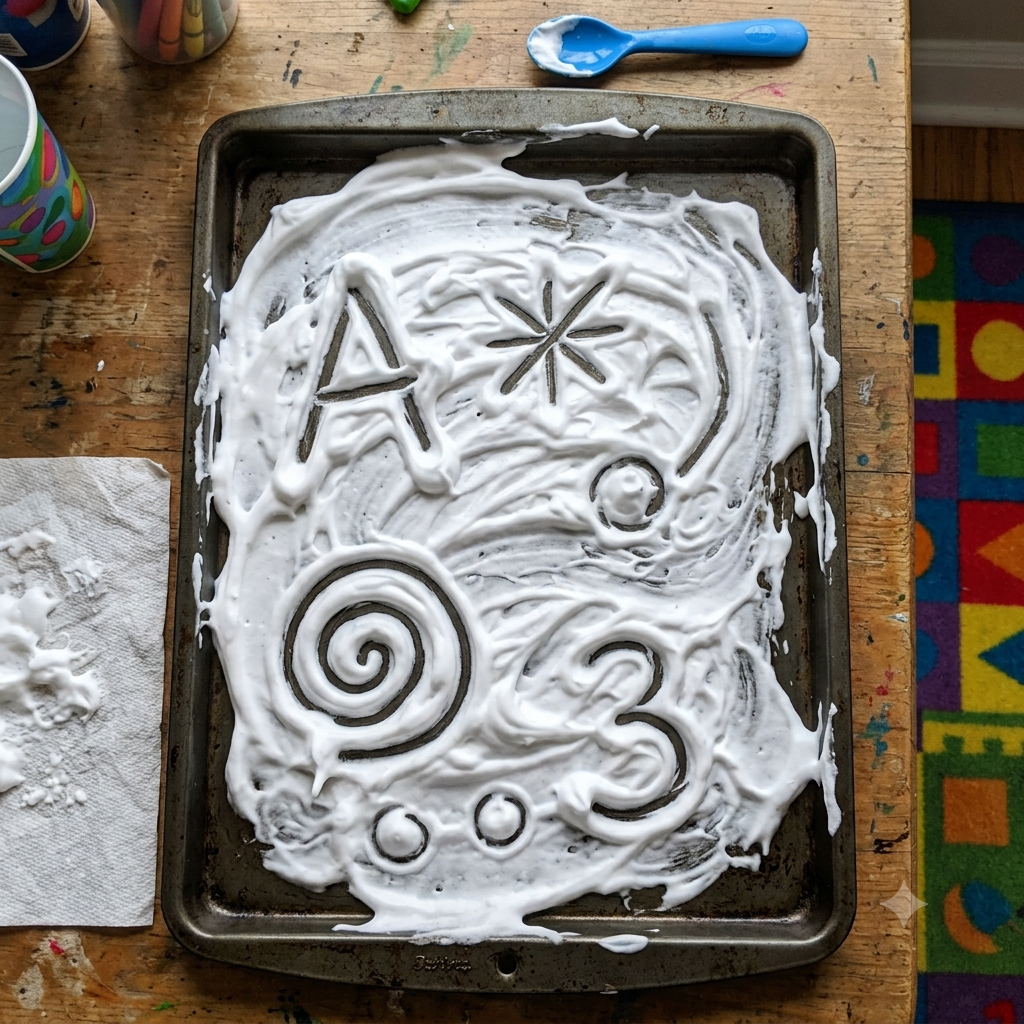
If you are a teacher, homeschooling parent, or caregiver looking for an affordable, highly engaging, and versatile educational tool, look no further than the hygiene aisle of your local grocery store. Shaving cream is a powerhouse for sensory play and hands-on learning. It is fluffy, moldable, inexpensive, and incredibly easy to clean up. In fact, many educators swear by it as an exceptional tool to make learning stick—literally and figuratively.
When you incorporate shaving cream into a lesson plan for kids, you immediately capture their attention. The tactile experience of squishing and smearing the foam breaks down learning barriers, reduces anxiety around making mistakes, and turns a mundane worksheet task into an exciting multi-sensory adventure.
Whether you are teaching a three-year-old their first letters or guiding a ten-year-old through a science experiment about the water cycle, shaving cream adapts perfectly to a wide variety of developmental stages. Let's explore exactly how you can build an educational, messy, and memorable lesson plan using shaving cream for children ages 3 to 10.
Why Use Shaving Cream in Lesson Plans?
Before diving into the specific activities, it is important to understand why shaving cream works so well from a pedagogical perspective. Children learn best when multiple senses are engaged. This concept, known as multi-sensory learning, helps cement new information into a child’s long-term memory.
Benefits for Early Childhood (Ages 3-5)
For preschoolers, shaving cream is the ultimate tool for fine motor development. When a young child spreads the cream and isolates their pointer finger to draw a shape, they are building the intrinsic muscles in their hands. These are the exact same muscles they will later use to hold a pencil, use scissors, and tie their shoes. It also provides a safe space for pre-writing skills without the pressure of holding a standard writing utensil properly.
Benefits for Elementary Students (Ages 6-10)
For older children, the benefits shift from basic fine motor skills to engagement and stress relief. Math and spelling can become tedious for elementary students. By replacing a piece of paper with a desk covered in shaving cream, you instantly lower the stakes. If an eight-year-old misspell a word, they don't have to deal with the frustration of a giant eraser mark—they simply wipe the "slate" clean with their hand and try again. This builds resilience and a growth mindset.
Shaving Cream Lesson Plans for Preschoolers (Ages 3-5)
At this age, the goal is exploration, basic recognition, and sensory input.
Activity 1: Alphabet and Number Tracing
Objective: Letter recognition and pre-writing skills.
How it works: Spray a dollop of shaving cream directly onto a clean table or a plastic tray. Have the child spread it out into a thin, even layer to create a "canvas." Call out a letter or a number, or show them a flashcard. Ask the child to use their index finger to draw the letter into the cream.
Why it works: The physical resistance of the shaving cream provides proprioceptive feedback to the child's brain, helping them remember the shape of the letter much faster than they would by simply looking at it.
Activity 2: Color Mixing Magic
Objective: Understanding primary and secondary colors.
How it works: Give the child a muffin tin or a partitioned tray. Fill each section with white shaving cream. Add a drop of red food coloring to one, blue to another, and yellow to a third. Give the child a popsicle stick or a paintbrush and let them mix the colors together to discover how red and blue make purple, or yellow and blue make green.
Why it works: It visually demonstrates cause and effect while teaching basic color theory in a hands-on, deeply memorable way.
Shaving Cream Lesson Plans for Early Elementary (Ages 6-8)
As kids enter early elementary school, you can leverage shaving cream to make core curriculum subjects more interactive and fun.
Activity 3: Messy Math and Equations
Objective: Practicing addition, subtraction, or basic multiplication.
How it works: Spread the shaving cream out on a desk. Act as the "caller" and give the students a math problem out loud, such as "What is 5 plus 7?" The students must write the entire equation and the answer into the shaving cream. Once you check their work, they get to "erase" it by smearing the cream flat again.
Why it works: It turns rote memorization and drill practice into a game. The novelty keeps them focused for much longer than a standard math worksheet would.
Activity 4: Shaving Cream Sight Words
Objective: Memorizing high-frequency words.
How it works: Similar to the math activity, you can use the shaving cream canvas for spelling tests or sight word practice. To add an extra layer of difficulty, you can dictate a short sentence and have them write the whole thing out.
Why it works: Spelling requires repetition. Writing words in shaving cream provides the necessary repetition without the boredom.
Shaving Cream Lesson Plans for Older Kids (Ages 8-10)
Older kids might think they are "too big" for sensory play, but incorporating shaving cream into science and art projects will quickly prove them wrong.
Activity 5: The Rain Cloud in a Jar Experiment
Objective: Understanding the water cycle, specifically precipitation.
How it works: You will need a large, clear glass jar or vase, water, shaving cream, and blue liquid food coloring. Fill the jar about three-quarters full with water. Top it with a thick, puffy layer of shaving cream (this represents the cloud). Have the students slowly drip the blue food coloring over the top of the shaving cream cloud.
The Science: As the food coloring saturates the shaving cream, it becomes too heavy for the "cloud" to hold. It will eventually break through the bottom of the shaving cream and rain down into the clear water below in beautiful blue streaks. This is a perfect visual representation of how moisture gathers in a cloud until it becomes too heavy, resulting in rain.
Activity 6: Marbled Paper Art
Objective: Exploring surface tension and creating unique visual art.
How it works: Spray a thick layer of shaving cream onto a baking sheet and smooth it out. Drop different colors of liquid food coloring or liquid watercolors onto the surface. Have the students use a toothpick or a skewer to drag the colors around, creating a marbled pattern. Take a piece of heavy cardstock or watercolor paper and press it firmly onto the surface of the shaving cream. Lift it up, scrape off the excess cream with a squeegee or the edge of a ruler, and you are left with a stunning, permanently dyed marbled design.
Why it works: It allows older kids to explore creative expression while observing how the dye sits on the surface of the foam rather than sinking in immediately.
Classroom and Home Management Tips for Shaving Cream Play
While shaving cream is fantastic, the idea of using it indoors can make some adults nervous. With a few simple management strategies, you can keep the chaos contained.
Select the Right Shaving Cream: Always purchase the cheapest, generic foam shaving cream you can find. Avoid gels, as they do not puff up correctly. More importantly, always buy the unscented or sensitive skin varieties to prevent allergic reactions or sensory overload from strong artificial fragrances.
Embrace the Cleaning Power: Here is the best-kept secret about shaving cream: it is essentially just fluffy soap! When the activity is over, the clean-up is actually a benefit. Have the kids rub the remaining shaving cream into the table surface until it disappears, then wipe it down with a damp paper towel. Your tables will be sparkling clean and smell incredibly fresh.
Set Clear Boundaries: Before the caps ever come off the cans, establish strict rules. Explain that shaving cream stays on the table or tray. It never goes in mouths, it never goes in hair, and it never gets thrown. Setting these expectations early prevents a fun lesson from turning into a chaotic mess.
Conclusion
Incorporating shaving cream into your lesson plans is one of the easiest, most cost-effective ways to boost engagement for children ages 3 to 10. From practicing the alphabet to visualizing the water cycle, the possibilities are only limited by your imagination. By stepping away from the pencils and paper and leaning into hands-on sensory play, you are giving kids the opportunity to learn through joy, curiosity, and a little bit of structured mess. Grab a can today and watch how quickly your students light up when it is time to learn!