Sketch Your Pet or Stuffed Animal
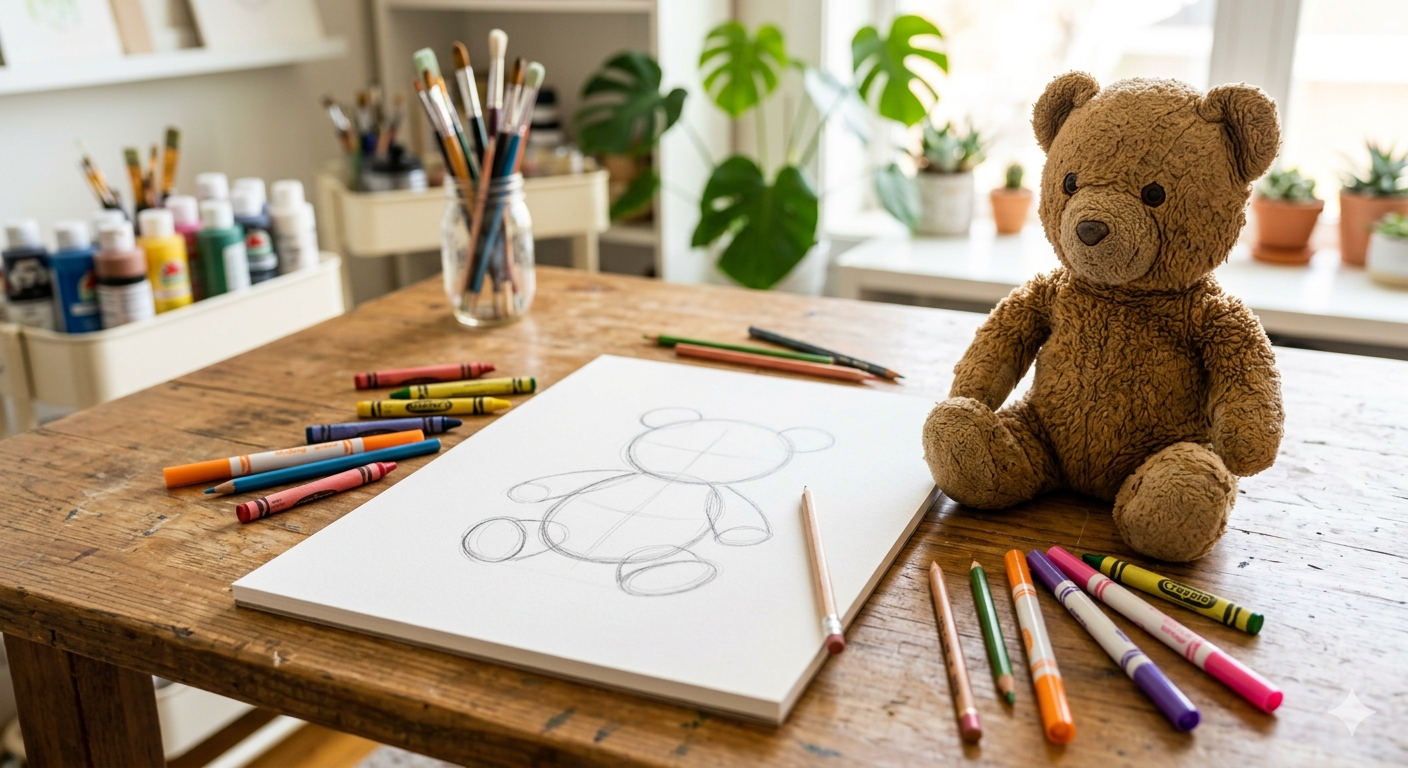
Art has an extraordinary ability to connect children with the world around them, allowing them to express their feelings, refine their fine motor skills, and develop spatial awareness. One of the most engaging ways to introduce young learners to observational drawing is through a subject matter they already love unconditionally: their pets or favorite stuffed animals. Whether it is a living, breathing family dog or a well-loved, velvety teddy bear, these comforting companions serve as the perfect, low-stress models for budding artists.
This comprehensive lesson plan is specifically designed for educators, homeschool parents, and art instructors working with children aged 3 to 10. By scaffolding the instructions to fit various developmental stages, this guide ensures that every child experiences success, builds confidence, and—most importantly—has fun exploring their creative potential.
Why Observational Drawing Matters for Young Learners
For children between the ages of 3 and 10, drawing is often conceptual. They draw what they know is there rather than what they actually see. For instance, they might draw a cat with four legs sticking straight down from a perfectly circular body because they know a cat has four legs. Introducing observational sketching encourages children to slow down, look closely, and process visual data accurately.
When sketching a beloved pet or stuffed animal, children learn to identify basic shapes, note changes in texture, and appreciate proportions. Because they hold deep affection for the subject, they are inherently more motivated to focus for longer stretches of time. This lesson bridges the gap between emotional attachment and intellectual execution, turning a simple art project into a holistic learning milestone.
Lesson Overview & Learning Objectives
Age Target: 3 to 10 years old (with age-appropriate modifications).
Duration: 45 to 60 minutes.
Core Objectives:
Identify and sketch foundational geometric shapes (circles, ovals, triangles) within a complex subject.
Practice basic observational skills by looking back and forth between the subject and the paper.
Explore different textures (fluffy, smooth, soft, coarse) using varied drawing strokes.
Develop fine motor control, pencil grip, and creative confidence.
Required Materials
The beauty of this lesson plan lies in its simplicity. You do not need expensive materials to achieve beautiful, expressive results. Gather the following items before starting:
Heavyweight drawing paper or sketchbooks (9x12 inches works best).
Drawing tools tailored to age groups (thick crayons/washable markers for ages 3-5; graphite pencils, colored pencils, or oil pastels for ages 6-10).
Handheld erasers.
The live pet (if calm and cooperative) or a favorite stuffed animal.
Optional: A small magnifying glass for checking out "fur textures."
Step-by-Step Guided Instruction
Step 1: The Meet and Greet (5–10 Minutes)
Begin the session by having the children introduce their pet or stuffed animal to you or their peers. Ask prompting questions to stimulate their descriptive vocabulary: "Is your bear's nose a circle or a triangle?" "What color is your puppy's fur?" "Are the ears long and floppy, or short and pointy?" This stage is crucial because it transforms passive looking into active observation.
Step 2: Hunting for Hidden Shapes (10 Minutes)
Explain to the children that every complex object in the world is made up of simple, hidden shapes. Model this on a whiteboard or a scrap piece of paper. If you are drawing a teddy bear, show them how the head is a large circle, the body is an oval, and the paws are smaller circles. Have the children use their fingers to trace the "invisible shapes" in the air over their stuffed animal before putting pencil to paper.
Step 3: Sketching the Framework (15 Minutes)
Encourage the children to lightly sketch those hidden shapes onto their paper. Remind them that these are just "guide lines" and do not need to be perfect. For younger children, you may need to guide them step-by-step: "First, let's all draw a big circle in the middle of our paper for the head." Remind them to leave plenty of room for the body and limbs.
Step 4: Adding Personality and Texture (15 Minutes)
Once the basic frame is built, it is time to bring the drawing to life. Show the students how to add specific features: eyes, a shiny nose, whiskers, or a collar. Introduce the concept of texture. Instead of coloring in solid blocks, demonstrate how short, quick dashes can make a drawing look fluffy, while long, smooth strokes can make a stuffed animal look velvety or slick.
Teacher's Tip for Live Pets: If a child is sketching a live family pet, remind them that animals move! Teach them to embrace the movement. If the dog changes positions, the child can either start a fresh, quick gesture sketch on a new page or simply continue drawing from memory, blending real-life observation with imagination.
Developmental Variations: Adapting for Ages 3 to 10
Toddlers & Preschoolers (Ages 3–5)
At this stage, expect symbolic or abstract representations. Focus heavily on motor control and identifying colors or basic circles. Avoid correcting their proportions. If their stuffed rabbit has eyes on top of its ears, celebrate their unique creativity! Focus your praise on their effort, line marks, and engagement.
Early Elementary (Ages 6–8)
Children in this bracket are starting to crave realism. Guide them to look closely at overlapping shapes (e.g., how the arm sits in front of the body). Introduce blending techniques with colored pencils or oil pastels, and encourage them to look at their subject at least half of the time they are drawing.
Older Elementary (Ages 9–10)
Older kids can explore advanced concepts like light and shadow. Show them how to identify where the light source is hitting their stuffed animal and how to add subtle shading underneath the chin or paws to give the drawing a three-dimensional appearance. Introduce fine liners or ink pens for precise detail work over their initial pencil sketches.
Wrapping Up: Celebration and Reflection
Conclude the lesson with a positive "Art Gallery Walk." Have everyone place their sketches next to their respective pets or plush toys. Instead of judging technical accuracy, ask each child to share one part of their drawing they are proud of or one detail that makes their pet unique. This builds a supportive community and leaves the children eager for their next artistic adventure.